Incident response
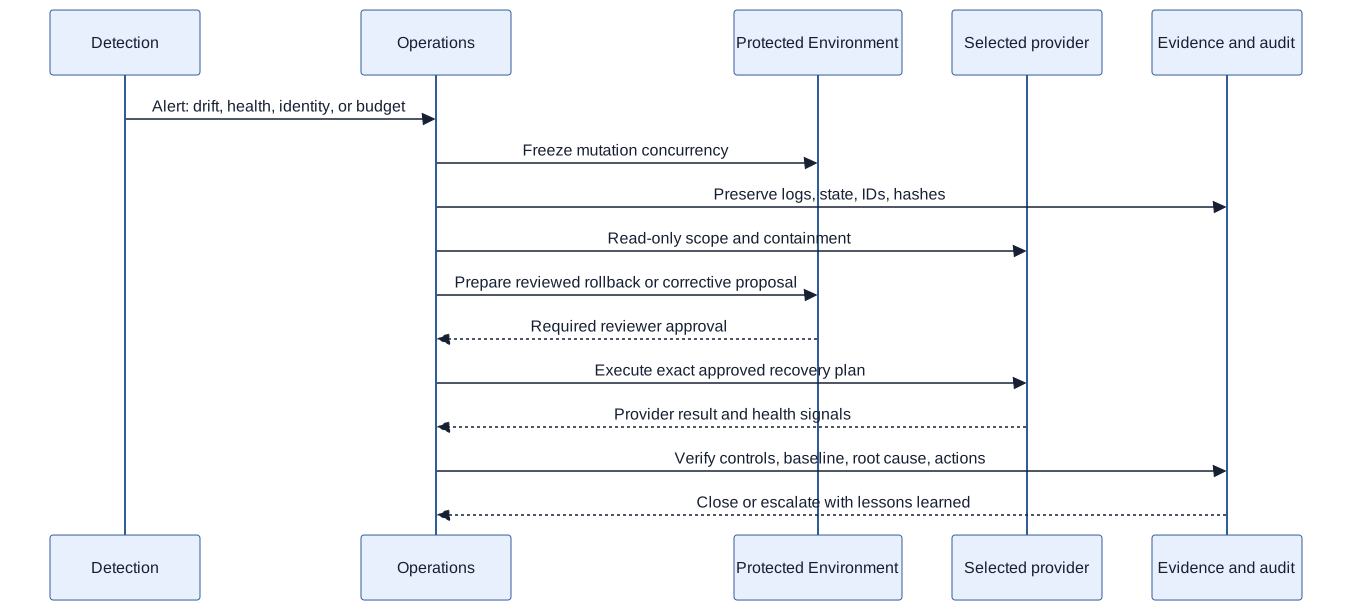
The shared response loop is detect, contain, preserve evidence, recover, verify, and learn. Freeze proposal/apply/destroy concurrency at the affected installation and keep a separate incident record. Do not rotate or delete evidence before preserving it.
AWS scenario: public EKS endpoint detected
Detect: Config/Security Hub or drift reports that the EKS endpoint is public.
Contain: pause the GitHub Environment, revoke/disable the affected OIDC role if compromise is suspected, restrict network access, and notify security. Preserve CloudTrail, Config, EKS audit/control-plane logs, workflow run IDs, state version, and proposal/plan hashes.
Recover: use the AWS runbook to restore private endpoint policy and network controls through an approved rollback or corrective proposal. Verify IAM/IRSA, VPC endpoints, KMS, CloudTrail, GuardDuty, and Security Hub continuity. Do not assume recreating the cluster is safe without a data and identity review.
Close: confirm no unauthorized access, rotate affected trust if required, record root cause, and add a policy/drift regression test.
Azure scenario: AKS identity or Key Vault access failure
Detect: Azure Monitor/Activity Log, Defender, drift, or workload health shows AKS Workload Identity or Key Vault private access failing.
Contain: pause the protected Environment and affected federated identity, preserve Activity Log, AKS diagnostics, Entra sign-in/audit events, Key Vault logs, workflow IDs, state version, and proposal/plan hashes. Keep the cluster private and do not make ad hoc public-endpoint changes.
Recover: verify the exact Entra federated credential subject, role scope, private endpoint/private DNS, Key Vault soft-delete/purge-protection state, and AKS identity configuration. Apply a reviewed rollback or corrective proposal, then test workload token exchange, secret retrieval, logging, and policy.
Close: revoke unnecessary assignments, rotate any exposed secret, record propagation timing and root cause, and add a federation/private-endpoint test.
Both scenarios require operator access and are not live exercises in this release.